Pro Wrestling Guerrilla (PWG) is more than just a wrestling promotion—it’s a cultural phenomenon. Since its inception, PWG has been a proving ground for independent wrestlers and a launching pad for talent who would go on to achieve global stardom. Known for its boundary-pushing creativity and intimate setting, PWG reshaped what fans could expect from wrestling.
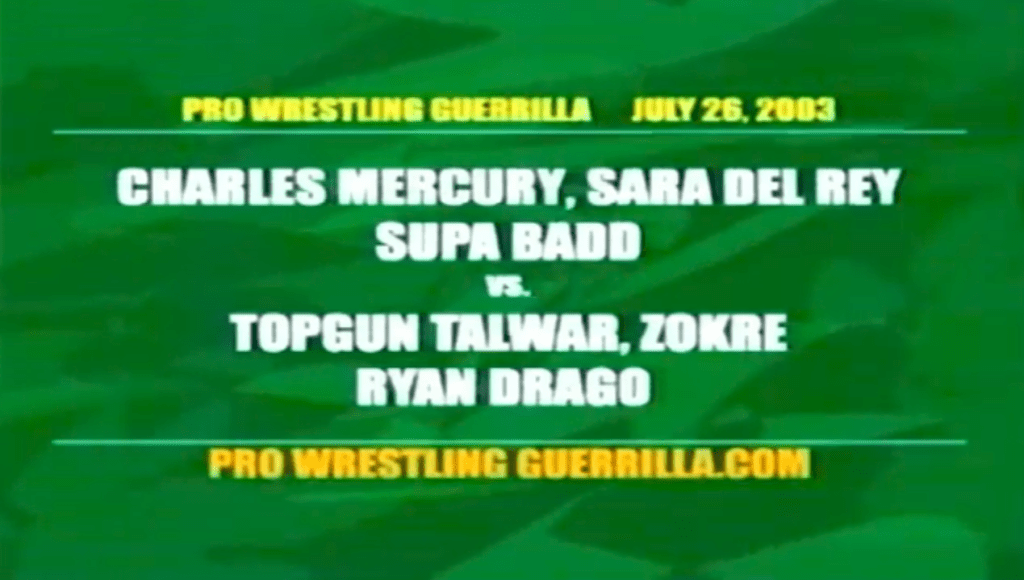
But every great legacy has a beginning. PWG’s origins are tied to a moment of raw energy, passion, and experimentation—a six-person tag match that kicked off the promotion’s very first show. That match featured me, Sara Del Rey, and Supa Badd against Topgun Talwar, Zokre, and Ryan Drago.
While it may not be the most technically polished match in PWG’s history, it remains one of its most significant. It wasn’t just a wrestling match—it was the start of a movement.
The Wrestling World in 2003: Why PWG Mattered
To understand the importance of PWG’s first match, you have to appreciate the state of wrestling in 2003. The Monday Night Wars were over, with WWE firmly established as the dominant force in the industry. WCW and ECW were long gone, leaving a gap for fans craving something outside the corporate wrestling machine.
The independent wrestling scene was alive but fragmented, and while companies like Ring of Honor were making waves on the East Coast, the West Coast needed its own breakout promotion. Enter Pro Wrestling Guerrilla.
PWG wasn’t just a wrestling company—it was a passion project. It was built by wrestlers for wrestlers, designed to showcase the best talent from Southern California and beyond. PWG offered something fresh: a mix of humor, athleticism, and a willingness to experiment.
What set PWG apart was its DIY spirit. There were no big arenas, no glitzy pyrotechnics. (In fact, I remember guardrails being a big deal for this show. There was even a part in this match where we used the guardrails because it was such an anomaly.) Instead, there were small venues, passionate crowds, and a determination to prove that wrestling could be more than just what you saw on TV.
The First Match: A Defining Moment
The opening match of PWG’s debut show on July 26, 2003, wasn’t just the first match in the company’s history—it was its mission statement.
The lineup featured six wrestlers with diverse styles and unique personalities:
Sara Del Rey, a trailblazer who broke down barriers for women in wrestling by competing against men and excelling in the ring.
Supa Badd, whose charisma and energy brought a spark to every match he participated in.
Topgun Talwar, a charismatic figure in the SoCal scene, representing the heart and soul of local wrestling.
Zokre, a dynamic high-flyer whose lucha libre style would become a staple of PWG’s identity.
Ryan Drago, a technical wrestler with an old-school flair.
And then there was me—a hybrid of technique and showmanship, eager to prove I could be a cornerstone of something special.
On paper, the match was a chaotic mix of styles. In execution, it was a perfect reflection of what PWG would become: fast-paced, exciting, and unafraid to take risks.
The Talent: Where They Went From Here
Looking back, it’s incredible to see where this group of wrestlers ended up:
Sara Del Rey became a pioneer not just in the ring but behind the scenes. After dominating the independent circuit, she transitioned to a coaching role with WWE. As part of the Performance Center, she trained many of today’s top stars, including Charlotte Flair, Becky Lynch, and Bayley. Her influence on the modern women’s wrestling revolution cannot be overstated.
Ryan Drago reinvented himself as Simon Gotch in WWE, where he became part of the Vaudevillains tag team. The group brought a unique, old-school aesthetic to NXT and WWE, earning them a cult following.
Supa Badd, Topgun Talwar, and Zokre remained integral to the SoCal wrestling scene, embodying the spirit of PWG’s early days and influencing future generations of wrestlers.
While not all of us became household names, we were all part of something that would change the course of wrestling history.
Why This Match Mattered
At the time, none of us knew how big PWG would become. For us, it was just another chance to wrestle, to entertain, and to prove ourselves. But in hindsight, this match carried enormous weight.
PWG didn’t just give wrestlers a platform—it gave them the freedom to be themselves. The promotion’s success proved that fans craved innovation and authenticity. Wrestlers could break out of the cookie-cutter molds imposed by larger companies and experiment with their styles, characters, and storytelling.
That first match set the tone for everything PWG would become. It demonstrated that independent wrestling could be more than just a stepping stone—it could be an art form in its own right.
The Legacy of PWG
In the years since that first match, PWG has grown from a local promotion to a global phenomenon. It has hosted some of the most iconic matches and events in wrestling history, with talent like Kevin Owens, Sami Zayn, The Young Bucks, Adam Cole, and countless others passing through its doors.
PWG became synonymous with innovation, from its unique blend of styles to its intimate venues where fans were practically part of the action. Its influence is evident in the current wrestling landscape, where independent promotions are thriving, and fans have more options than ever before.
Relive the Moment
As we celebrate the legacy of PWG, it’s important to honor where it all began. That first match wasn’t just a fun night—it was the birth of a movement.
If you’ve never seen it, you’re in for a treat. Watch the historic match here: PWG’s First Match – Sara Del Rey, Supa Badd, and Me vs. Topgun Talwar, Zokre, and Ryan Drago.
It’s a reminder of what wrestling can be when it’s driven by passion, creativity, and a love for the craft. It’s raw, it’s unpolished, and it’s beautiful.
PWG’s soul was born that night, and it continues to inspire wrestlers and fans alike. And for me, being part of that history will always be one of my proudest moments.
 CharlesRamosOfficial.com
Leave a comment