Why Do We Believe What We Believe?
Every culture has its own customs, traditions, and religions, but these differences weren’t created randomly. They are deeply tied to where humans originated, how they survived, and how they made sense of the world without modern technology.
In ancient times, humans were deeply connected to their environments. Survival depended on understanding the land, weather, and resources. Today, even though we have science and technology, the echoes of those early survival strategies remain. Customs, language, and beliefs still carry the imprint of the environments our ancestors adapted to.
While society often highlights divisions—“us vs. them,” right vs. left, city vs. rural—these divisions are not new. They are rooted in biology and history. Understanding where we come from and why we believe what we do can help us rethink division without losing identity or cultural heritage.
1. How Geography Shaped Early Human Life
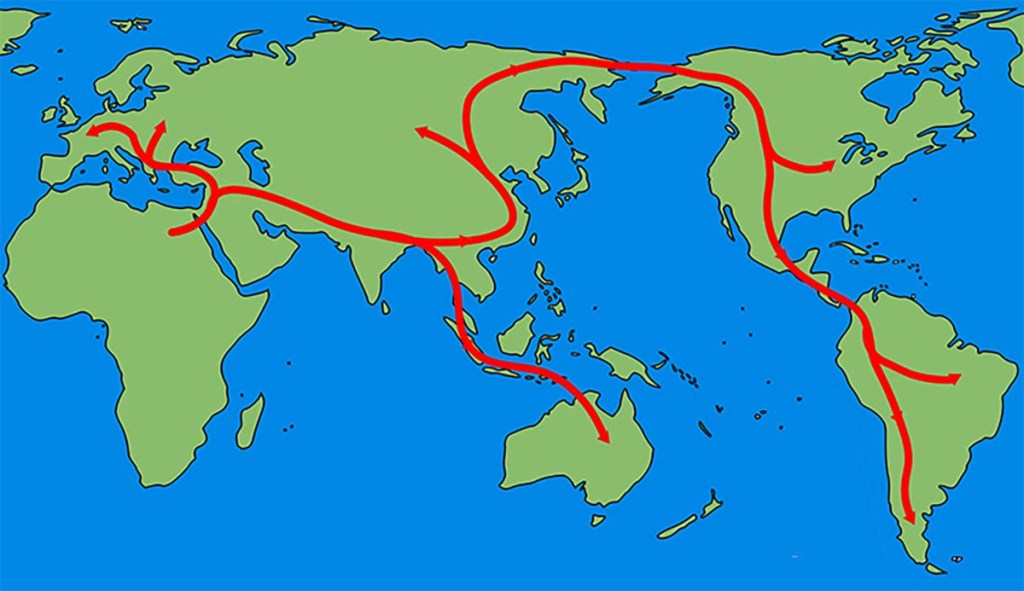
Humans first originated in Africa. As they migrated, they adapted to diverse climates and terrains. These environmental factors dictated survival strategies, which then shaped culture.
- Desert dwellers: In arid regions, water scarcity led to strict rules for sharing resources. Religious and social customs often revolved around survival strategies.
- Island cultures: Coastal and island societies relied on fishing and trade. Gods of the sea, tides, and storms were central to belief systems. Language incorporated concepts of the ocean and navigation.
- Nomadic tribes: Moving with herds or seasonal food sources required flexibility. Oral traditions thrived, with stories and songs preserving essential survival knowledge.
These environmental factors didn’t just dictate food or clothing—they shaped social structures, leadership roles, and moral codes. Communities that adapted successfully thrived, and their customs were passed down for generations.
2. The Birth of Religion: Making Sense of the Unknown
Before science and technology, religion was humanity’s way of explaining the unexplainable. Natural events like storms, droughts, and disease were terrifying, so humans created belief systems to make sense of them.
- Sun gods and fertility rituals: In agricultural societies, the sun determined crop success. Rituals honored and appeased these deities.
- Storm gods: In regions prone to floods or lightning, people developed ceremonies to prevent destruction.
- Death and the afterlife: Rituals helped humans process loss, honor ancestors, and maintain social cohesion.
These belief systems evolved into structured religions we recognize today. While originally practical, they shaped morality, culture, and social hierarchy.
3. Agriculture and Belief: How Food Shaped Faith
Agriculture is another example where early humans substituted ritual for knowledge. Without modern tools or science, people created customs to ensure survival.
- Crop rotation and soil fertility: Early farmers didn’t understand chemistry, so they relied on gods and rituals to protect crops.
- Rain dances and harvest ceremonies: These practices reinforced social bonds and shared responsibility.
- Fasting and seasonal festivals: These rituals aligned with natural cycles of scarcity and abundance, indirectly promoting health and survival.
Even though agriculture is now understood scientifically, these traditions laid the foundation for culture, community, and moral systems.
4. Language: A Byproduct of Survival Needs
Language evolved differently in different regions based on survival needs and environmental pressures.
- Tonal languages: Humid forests shaped sound patterns.
- Click languages in Africa: Developed for discreet communication during hunting.
- Writing systems: Agricultural societies needed records for trade, harvests, and laws.
The words we use to describe our world influence perception. Cultures with multiple words for snow, water, or sand demonstrate an intimate connection with their environment. Language didn’t just convey information—it shaped thought and reinforced identity.
5. The Ancient Roots of “Us vs. Them”
Tribalism is as old as humanity. For early humans, members of another tribe often meant danger—competition, conflict, or disease. This caution became ingrained over generations.
- Survival-driven suspicion: Being wary of outsiders was rational.
- Modern echoes: These instincts influence political, cultural, and social divisions today.
- Reframing division: Understanding tribalism allows us to recognize instinctive biases without condemning ourselves or others.
While these instincts are deep-rooted, they can be challenged. Just as humans evolved tools, language, and agriculture, we can evolve social instincts toward inclusivity and collaboration.
6. Moving Beyond Division Without Losing Identity
Acknowledging tribal instincts doesn’t require abandoning cultural identity. Understanding roots of belief and custom can help engage with difference constructively.
- Identity vs. openness: Retain pride in heritage while embracing diversity.
- Expanding the tribe: Think in terms of shared humanity instead of “us vs. them.”
- Practical application: Community projects, collaborative work, and open conversations are modern equivalents of survival cooperation.
Humans have always evolved. From explaining storms with myth to understanding meteorology, we can reinterpret instincts through knowledge. Inclusivity is simply the next step in human evolution.
Conclusion: The Future of Human Connection
Understanding where we come from clarifies where we are. Geography, climate, and survival needs shaped languages, religions, and instincts. These differences once protected us; today, they can divide or enrich us.
By examining the origins of belief, culture, and division, we can approach life with curiosity instead of fear. We don’t have to agree on everything to coexist. Much of what divides us is ancient, instinctual, and adaptable.
The world has always changed, and humans have always adapted. The question is: will we adapt again—toward understanding, inclusivity, and shared humanity?
 CharlesRamosOfficial.com
Leave a comment