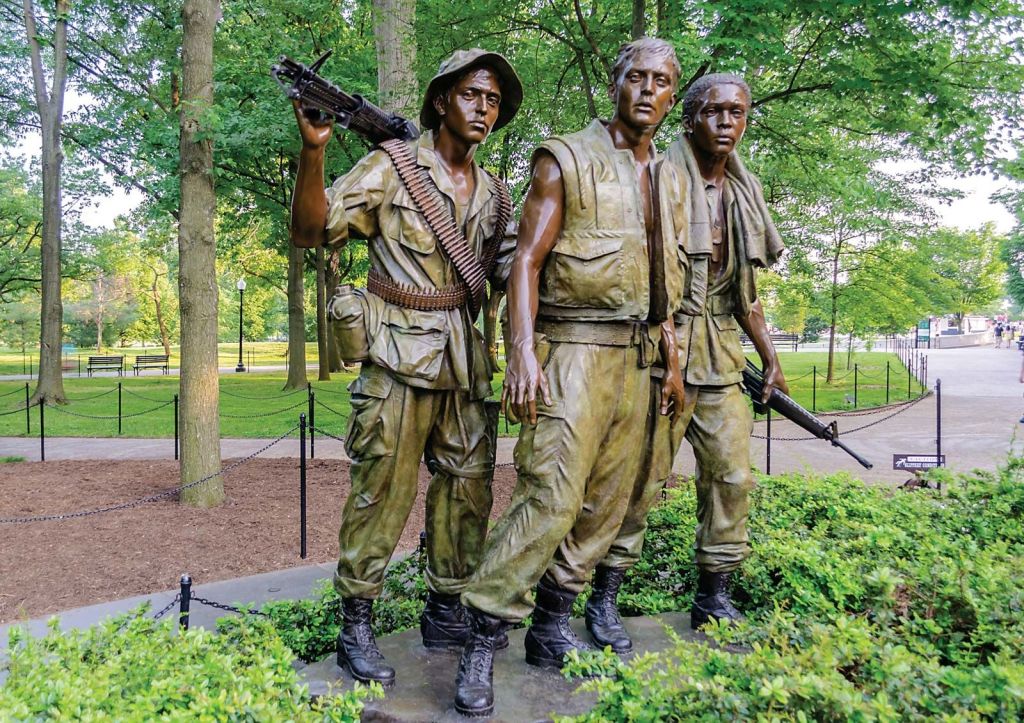
Last Tuesday, something unexpected happened in my living room. My mom, my daughter, and I sat down after dinner and started talking about my mom’s time serving this country. She’s a Vietnam veteran, but not in the way most people imagine when they hear those words.
She served as a nurse here at home, working at bases across the United States. While she never went overseas into combat, the conversation took a turn that left me speechless. my mom said initially she wanted to be a nurse overseas because they saw more action. She wondered maybe they didn’t send too many women because that wasnt what they did in those days. She said she was thankful, now, that she hadn’t been sent into a combat zone. A lot of nurses who did never made it home. I jokingly tried to lighten the mood and said, “Grandma wanted to be in the battle like a warrior”, but my mom shook her head.
“No,” she said flatly. “Back then I didn’t have anyone to live for. It wasn’t a big deal to me. I just wanted to get away from my foster family.” She paused, and the weight of her words hung in the air. Then she told us about her childhood—about a foster mom who physically abused her and a foster father who repeatedly tried to rape her. She said that back then, if you complained to the police, they laughed in your face and told you to go home. I sat there stunned, not just because I knew this story but because of how raw she was in telling it. She wasn’t romanticizing her service. She wasn’t painting herself as a hero. She was explaining how, for her and for so many others, the military wasn’t just about patriotism—it was an escape from something worse.
That’s when I made a connection that hit me hard. When we see veterans struggling with addiction, depression, or PTSD, we often assume all their pain comes from the war. But what if for many, the trauma started long before they put on the uniform? This blog post is about that realization—what my mom lived through, the hidden stories of women who served during Vietnam, the state of mental health back then versus now, and how much farther we still have to go. My mom’s early life was marked by abuse, neglect, and survival. In the 1950s and 1960s, children in foster care often had little protection. Social services existed, but they lacked oversight, and abuse was easy to hide.
She remembers trying to tell adults what was happening. No one believed her. The culture was different—domestic violence and child abuse were whispered about, if at all. Police officers often viewed these as “private family matters.” Her foster father’s attempts to assault her weren’t shocking to authorities; they were shrugged off. Her foster mother’s beatings weren’t seen as abuse but “discipline.” And so, like many others of her generation, she learned silence as survival. For her, the military wasn’t a career choice at first. It was a lifeline. It meant leaving behind a home that never felt safe. It meant earning a paycheck, standing on her own, and being part of something larger than herself.
When most people think of Vietnam War nurses, they picture women in fatigues in Saigon, tending to wounded soldiers under fire. And yes—thousands did exactly that. Roughly 265,000 American women volunteered during the Vietnam era. About 11,000 served in Vietnam itself, 90% of them as nurses. But the majority served stateside or in nearby locations like Japan, Guam, and the Philippines. Their roles were critical. Hospitals on U.S. soil filled with young men fresh from combat zones, dealing with wounds both visible and invisible.
My mom was one of these women. She worked at multiple bases around the country, treating soldiers returning from war, soldiers about to ship out, and soldiers dealing with everything in between. Most were burn patients. The stress was intense. Many nurses worked long shifts with few breaks, caring for men with catastrophic injuries. They weren’t dodging mortars, but they were absorbing trauma every day—seeing things most civilians couldn’t imagine.
And yet, for decades, their contributions were downplayed or overlooked. It wasn’t until 1993 that the Vietnam Women’s Memorial was dedicated in Washington, D.C., giving recognition to the thousands of women who served, often silently. My mom’s story isn’t unique. Many young men and women of that era saw the military as an escape route. She told me, “Even with the draft, a lot of guys were happy to go. They wanted out of their houses. They wanted to leave behind fathers who drank and hit them, or families who never showed them love.”
It’s easy to forget that the 1960s and 70s were a very different time socially. Domestic violence was rampant and rarely prosecuted. Alcoholism was normalized. A man came home drunk and hit his wife or kids, and neighbors turned a blind eye. For young people stuck in these homes, the military looked like freedom. Yes, there was the risk of dying in war—but at least they weren’t trapped in the misery they already knew. This was true for my mom, who enlisted not out of patriotic fervor, but out of desperation. She had no family, no safe home, and nowhere else to go.
Today, when we think of Vietnam veterans struggling with addiction, homelessness, or PTSD, we assume the war did it to them. And to be fair, the war was brutal beyond words. Combat veterans witnessed death and destruction on a scale that defies imagination. Nurses and medics were surrounded by suffering daily. But what my mom said made me rethink this assumption. Many of these young people weren’t walking into Vietnam as blank slates. They carried scars from broken homes, abusive parents, and neglected childhoods.
The war didn’t create trauma from scratch. It layered new trauma on top of the old. When veterans came home and struggled, society was quick to point fingers at the war itself. But in reality, their pain often had deeper roots—roots that had been ignored long before they were drafted or enlisted. For women like my mom, the silence was even heavier. Not only were women’s roles in the military minimized, but their personal trauma often went unspoken. A woman could be abused in her home, harassed in her workplace, and overlooked in her service. And when she struggled later in life, she was more likely to be dismissed or blamed.
In the 1960s and 70s, women veterans didn’t have the same recognition or support systems as men. For years, even the VA was reluctant to acknowledge women as veterans at all. Many had to fight for basic benefits. It wasn’t until leaders like Joan Furey, a nurse who served in Vietnam, pushed for change that the VA began to take women’s mental health seriously. Furey helped establish one of the first centers for women veterans with PTSD. She testified before Congress in 2000, advocating for recognition and care.
Another thing my mom said stuck with me: “Back then, alcoholism and violence were just part of life. Nobody called it trauma.” She was right. In the 60s and 70s, mental health wasn’t mainstream. PTSD didn’t even exist as a diagnosis until 1980. Before that, veterans with flashbacks and breakdowns were often called “weak,” “crazy,” or “shell-shocked.” Alcoholism was widespread, but people didn’t talk about it as addiction—they called it “blowing off steam.” Domestic violence wasn’t treated as a crime but as a “family problem.” Slowly, things began to change. Vietnam veterans themselves were a big part of that. Groups like Vietnam Veterans Against the War started holding “rap groups,” where veterans could talk openly about their experiences. Those conversations laid the groundwork for PTSD to be recognized officially.
Today, we have language and frameworks—trauma, PTSD, complex PTSD, substance use disorder. We have therapies, shelters, crisis lines. But we’re still climbing the hill toward true understanding and accessibility. Nurses during Vietnam, whether overseas or stateside, faced enormous pressure. Studies from that era show that nurses had higher rates of smoking and alcohol use compared to the general population. It was how many coped with the stress of constant exposure to suffering. But in those days, seeking mental health support was seen as weakness. A nurse who admitted she was struggling risked losing her job or being labeled unfit. So they bottled it up, went home, and carried it alone. This silence is why so many women veterans’ stories remained untold for decades.
Since the 1970s, progress has been made. Domestic violence shelters emerged. Laws changed to criminalize abuse that was once ignored. Mental health awareness spread. Programs like “Seeking Safety” were developed to support people dealing with both trauma and addiction. The VA now has dedicated women’s health programs. The conversation around PTSD is mainstream. My daughter’s generation has vocabulary and resources my mom could never have imagined. And yet—there’s still a long way to go.
Veterans, especially women, still face higher rates of homelessness, substance use, and suicide. Stigma remains. Services are better, but they’re not always easy to access. And society still struggles to understand that trauma doesn’t always begin—or end—on the battlefield. As I listened to my mom talk, I realized how much strength it took just to survive her childhood, let alone serve her country. She wasn’t just a nurse. She was a young woman clawing her way out of a nightmare. Her story reframed how I see veterans. They aren’t just defined by what they saw in war. They’re also shaped by the lives they lived before—and the battles they fought long before they wore a uniform.
When my daughter hears these stories, she’ll grow up understanding that service takes many forms. That heroism isn’t always about combat. Sometimes, it’s about surviving, showing up, and continuing to love and give when the world gave you every reason not to. That’s my mom’s story. That’s the legacy she carries. And that’s why I’m sharing it here—because her truth matters, and because it sheds light on a part of history and humanity that too often goes unseen.
My mom didn’t serve in the jungles of Vietnam. She didn’t dodge bullets or patch up soldiers on a battlefield. But she did serve. She served by caring for the men who came back broken and bleeding. She served by standing up in a system that didn’t care about women’s stories. She served by surviving, when her childhood tried to break her before she even began. And through her story, I see something bigger: that the struggles of veterans are not always rooted only in war. They are rooted in family, in society, in silence. If we want to truly honor veterans—women and men—we have to see their whole story. Not just the part in uniform, but the chapters before and after. My mom’s life is proof of that. And I am proud to tell her story.
 CharlesRamosOfficial.com
Leave a comment