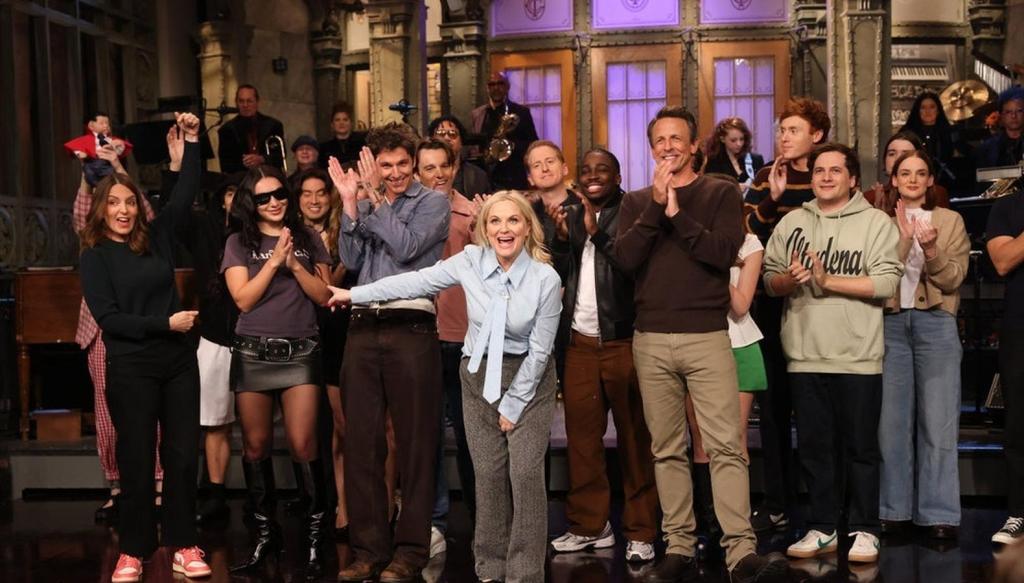
Every few years, it feels like we all have the same debate: Saturday Night Live isn’t funny anymore. Maybe you’ve seen it said online, or maybe you’ve even felt that way yourself. Fans of the show, especially those who grew up watching particular casts, often pine for the “good old days” — the original cast in the 1970s, the 1990s with Chris Farley and Adam Sandler, or the mid-2000s with Tina Fey and Will Ferrell. The refrain is always the same: SNL used to be sharp, edgy, and hilarious, and now it just isn’t.
But is that really because the show has declined? Or is there something bigger at play — something about the world itself that’s changed? My theory is this: SNL feels less funny not because the writers or performers are worse, but because the absurdity gap that satire depends on has collapsed. Satire used to exaggerate reality into absurdity. Now, reality is already absurd.
Let’s unpack that.
The Absurdity Gap
Satire relies on what I’ll call the absurdity gap: the space between what actually happens in the real world and the exaggeration that comedy adds. The wider the gap, the funnier the result.
Think back to the early years of SNL in the mid-1970s. Chevy Chase famously played Gerald Ford as clumsy, constantly tripping and falling. Was Ford really that accident-prone? Of course not. But the image stuck, because the exaggeration was funny. You laughed because you knew the real Ford wasn’t actually tumbling down stairs every day, but Chase’s slapstick made a point about how people perceived him.
Fast forward to the 1980s. Dana Carvey’s George H.W. Bush impression wasn’t just mimicry — it took Bush’s odd phrasings and stiff mannerisms and stretched them into catchphrases like “Not gonna do it.” The humor came from taking something small and blowing it up.
In the early 2000s, Will Ferrell’s George W. Bush sketches became legendary. His version of Bush was so goofy and clueless that people still quote “strategery” decades later. Ferrell didn’t just copy Bush; he exaggerated him into a bumbling frat boy, which widened the absurdity gap and made it all the more hilarious.
That’s how satire works: reality gives you a baseline, and parody pushes it so far into the ridiculous that it becomes comedy.
When Reality Becomes Parody
The problem now is that reality itself has shifted. Real-world headlines often read like jokes. For example, in recent years, we’ve seen presidents openly promote conspiracy theories on social media, serious White House events paired with cage-fighting spectacles, and political figures saying things that once would have been unimaginable.
Take the idea of a UFC weigh-in at the Lincoln Memorial. Twenty years ago, that would have been a pitch for an SNL cold open: “What if a president turned the Lincoln Memorial into a wrestling stage?” The absurdity gap was wide, and the exaggeration worked. Today, it’s not parody. It’s an actual plan. And when reality is already that ridiculous, where can the comedy go?
The joke is gone because the absurdity has already been done for you. Instead of “imagine if,” we live in “this actually happened.”
When The Onion Became the News
This collapse of absurdity isn’t unique to SNL. The Onion, the satirical news site, once thrived by creating headlines so outlandish they could never be true. Headlines like “Congress Deadlocked Over How to Not Provide Health Care” or “Area Man Passionate Defender of What He Imagines Constitution to Be” were funny because they exaggerated reality into absurd parody.
However, over time, real headlines began to resemble Onion headlines. Politicians and pundits began saying things so extreme that they matched or even outdid parody. That’s why you often see people comment online, “Wait, is this The Onion or is this real?” The fact that people can’t tell the difference anymore shows just how much the absurdity gap has shrunk.
Even The Daily Show, which Jon Stewart turned into a cultural phenomenon in the 2000s, depended on the absurdity gap. Stewart would show a clip of a politician saying something dumb, then exaggerate it further with jokes. It worked because the clips were silly but not unbelievable. He was the one adding the absurdity.
Now, clips themselves are often so bizarre that they feel self-satirizing. The comedy writes itself, but in a way that leaves less room for parody. You don’t need exaggeration when reality is already that extreme. That’s why hosts like Trevor Noah and John Oliver leaned harder into commentary, analysis, or even outrage rather than pure parody. They had to, because the material was already beyond parody.
The Emotional Weight Problem
Another piece of the puzzle is emotional weight. In earlier decades, political absurdity felt more harmless, or at least more distant. Nixon’s paranoia, Reagan’s aloofness, or Clinton’s evasiveness were serious issues, but they didn’t evoke the same existential dread many people feel now. The absurdity was easier to laugh at because it wasn’t tied as directly to threats people felt in their daily lives.
Today, absurdity often comes with genuine harm. When leaders spread misinformation about public health, attack democratic institutions, or stoke social division, the absurdity isn’t just silly — it’s frightening. That heaviness undercuts the ability to laugh.
Think about the moment when a president suggested injecting disinfectant to fight a virus. Twenty years ago, if a comedy writer pitched that for a sketch, it would’ve been dismissed as too over-the-top. And yet it happened live in a press conference. Late-night writers struggled to find a punchline because the event itself was already absurd. More importantly, people were scared because misinformation during a pandemic has real consequences. The absurdity gap was gone, and the emotional weight crushed the humor.
Comedy in the Age of Truth Stranger Than Fiction
So why do people say SNL isn’t funny anymore? It’s not necessarily because the writers are worse or the cast less talented. It’s because satire depends on exaggeration, and exaggeration has become nearly impossible when reality is already exaggerated.
In the past, the writers could take the day’s news and spin it into something surreal. Now, the news itself often feels surreal. The premise “what if something outrageous happened” doesn’t work when outrageous things are happening every day. The space where comedy once lived has been swallowed by reality.
Where Does Satire Go From Here?
So what happens to satire in a world where parody feels redundant? Comedians and shows have been experimenting with different paths.
Some lean into dark humor, acknowledging the horror instead of trying to soften it. Shows like Last Week Tonight with John Oliver often balance comedy with serious analysis, making people laugh but also educating them. It’s less about parodying absurdity and more about using humor to cope with it.
Others pivot away from politics altogether and lean on silliness. SNL has created viral sketches like David S. Pumpkins, which have nothing to do with current events but succeed because they’re absurd in a different way. When political parody feels redundant, pure nonsense can fill the gap.
Another approach is humanizing stories. Instead of trying to exaggerate politicians who already exaggerate themselves, comedians focus on hypocrisy in smaller, everyday ways. For example, mocking contradictions in consumer culture, corporate branding, or social media habits can be funny because those areas still have an absurdity gap to exploit.
Even South Park has wrestled with this. For years, the show thrived on exaggerating current events into surreal extremes. But as reality became stranger, the creators shifted toward serialized storytelling and meta commentary about how parody itself was becoming impossible. In one interview, Trey Parker and Matt Stone admitted that Trump made satire difficult because he was already living a cartoon parody.
Stephen Colbert faced the same issue. On The Colbert Report, he played a caricature of a right-wing pundit. The character was hilarious because he exaggerated the tropes of conservative media. But when Trump rose to power, reality blurred those exaggerations into truth. Colbert retired the character and moved to a more traditional late-night format, because parody no longer worked in the same way.
The Nostalgia Factor
It’s also worth noting that nostalgia plays a role. People often feel that the SNL they grew up with was the funniest. If you were a teenager in the 1990s, the Chris Farley and Adam Sandler years probably feel like the peak. If you came of age in the mid-2000s, maybe it’s Tina Fey and Amy Poehler. SNL has always been uneven, with some sketches bombing and others becoming classics. But when you pair nostalgia with the collapse of absurdity, it’s no surprise people feel like it’s not as funny as it once was.
Conclusion
So maybe when people say “SNL isn’t funny like it used to be,” what they’re really noticing is the collapse of absurdity. Satire used to take reality and push it into the unbelievable. Now, reality is already unbelievable. The gap is gone, and with it, much of the comedic punch.
Twenty years ago, a UFC weigh-in at the Lincoln Memorial would have been a sharp SNL sketch. Today, it’s a headline. And no punchline can compete with that.
Ultimately, SNL isn’t worse — it’s playing on a broken field. The absurdity gap is gone. To survive, satire has to reinvent itself, not because the writers are less talented, but because reality has stolen its best material. And that, ironically, might be the biggest joke of all.
 CharlesRamosOfficial.com
Leave a comment