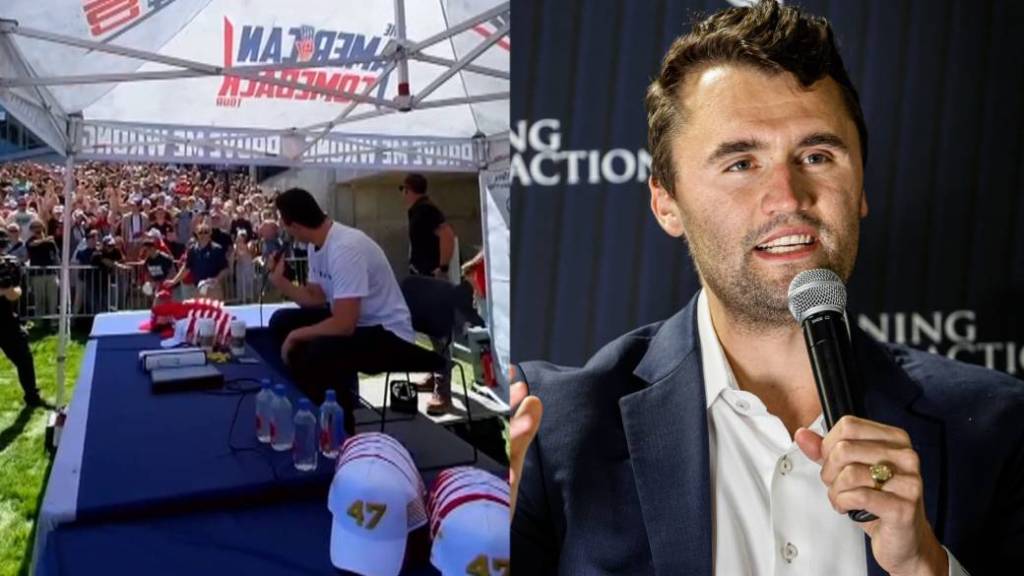
On September 10, 2025, conservative activist and media personality Charlie Kirk was shot and killed during the first stop of his “American Comeback Tour” at Utah Valley University. The shooting occurred just after noon in Orem, Utah, and Kirk later died from his injuries. His death stunned the political world and drew prompt condemnation from across the spectrum, including former President Trump, California Governor Gavin Newsom, and leaders in both parties (AP News; SF Chronicle).
This tragic event raises painful but necessary questions: What does it say about civil discourse in America? How do we process the death of someone with whom we strongly disagree? And why do some victims of political violence seem to prompt more outrage than others? Earlier, I posted a statment on socials.
“We need to be able to disagree with each other and still keep conversations from resorting to violence. I have conservative friends that I’m able to have great discussions with. I don’t always agree with their opinion, but they believe in what they’re saying just as much as I do. By having these conversations and actually listening you can gain valuable insight and we can all come to a better understanding.”
Born in 1993, Charlie Kirk founded Turning Point USA (TPUSA), an influential conservative student organization. A fervent supporter of Donald Trump, he hosted The Charlie Kirk Show podcast and frequently appeared on Fox News. Known for combative rhetoric on topics like immigration, gender, and education, he was loved by many conservatives and reviled by many on the left.
Agree or disagree, Kirk played a major role in shaping political conversation among young Americans. That a public figure like him would be murdered in such a sudden and violent way underscores how far our political animosities have escalated.
I don’t agree with Charlie Kirk or many of his positions, but killing someone for their beliefs or speech is simply unacceptable. If violence becomes a justified response to disagreement, we all lose.
Sadly, Kirk’s murder is one of several politically motivated attacks in recent years:
- Gabby Giffords was shot in 2011 at a constituent event in Tucson, AZ, resulting in six deaths. She survived but was permanently injured. (NPR)
- In 2017, Steve Scalise was critically wounded during a congressional baseball practice shooting. (BBC)
- In 2022, Paul Pelosi, husband of Speaker Nancy Pelosi, was attacked in their home with a hammer; he survived. (NYT)
These incidents show that political violence affects both sides. That’s why we must guard against minimizing—or ignoring—violence when it happens to someone we disagree with.
This summer, Minnesota experienced one of the most chilling acts of political violence in its history:
- June 14, 2025: A man dressed as a police officer attacked two Democratic Minnesota lawmakers in separate home invasions. Speaker Emerita Melissa Hortman and her husband Mark were killed in Brooklyn Park. Earlier that night, State Senator John Hoffman and his wife Yvette were shot in Champlin and severely wounded—but survived. The suspect, Vance Luther Boelter, left behind a jaw-dropping “hit list” of over 60 pro-abortion and Democratic public officials. Governor Tim Walz called it an “act of targeted political violence.” (Wikipedia Wikipedia; Time TIME)
- A massive two-day manhunt ended with Boelter’s arrest. He’s now facing murder, attempted murder, stalking, and firearms charges, with both state and federal indictments pending. In July, a grand jury formally added federal charges; Minnesota hasn’t had the death penalty since 1911, but it’s under consideration. (Reuters Reuters; NY Post New York Post)
- The victims’ children, Sophie and Colin Hortman, issued a heartfelt statement calling their parents “the bright lights at the center of our lives” and urged others to honor their legacy through kindness and public service. (People People.com)
The political and public reaction was swift and bipartisan:
- Senator Tina Smith, a Democrat from Minnesota, publicly confronted her Republican colleague — Senator Mike Lee of Utah — after he promoted misinformation by calling the assassin a “Marxist” and blaming Minnesota’s governor. Smith said his comments were “beyond the pale” and deeply hurtful. Many Minnesota Republicans also condemned Lee’s posts as baseless and disrespectful. (The Guardian The Guardian)
- Across the political spectrum—locally, across state lines, and among federal leaders—there were emphatic condemnations. Utah and Massachusetts leaders expressed shock, unity, and a clear message: political violence has no place in democracy. (CBS Boston CBS News; Utah reaction The Salt Lake Tribune)
Reflecting on both the Minnesota and Kirk tragedies, a troubling question arises: Why do some victims receive far more national attention and empathy than others?
- Millions expressed grief and outrage over the killing of Kirk.
- Minnesotans were deeply moved and alarmed by the political assassinations there—but did other national political factions engage with the urgency of that violence in the same way?
These are uncomfortable but important questions. Unequal attention can foster a sense that political violence is more acceptable—or more justified—when it aligns with your side. That perception weakens societal bonds and undermines democracy.
Adding fuel to speculation: a clip from Charlie Kirk’s own podcast surfaced online, where he described Jeffrey Epstein as a Mossad agent potentially tied to Saudi intelligence and the CIA, all part of an alleged blackmail operation.
- This goes beyond partisan politics and taps into deep concerns about power, surveillance, and corruption.
- When someone talks about secret international plots and is then killed days later, people are naturally prone to draw connections—especially when transparency is limited.
To be clear: there’s no verified evidence linking Kirk’s podcast remarks to his death. But we must acknowledge the context and why speculation has taken hold.
In moments of extreme chaos, conspiracy theories spread fast. Some online narratives are pushing ideas that Kirk’s death was orchestrated to distract from Epstein-related headlines or to justify police-state legislation.
It’s understandable why these theories emerge; trust in institutions is shaky. But promoting unsubstantiated conspiracy theories undermines real understanding and distracts from urgent problems like political violence, polarization, and the breakdown of civil discourse.
Responsible discourse calls for:
- Acknowledging speculation,
- Avoiding presenting it as truth,
- Committing to facts and empathy—even when evidence remains limited.
At the end of the day, the path forward is grounded in these truths:
- We must reject political violence, no matter the target or context.
- We must listen more than we label, approaching disagreement with curiosity, not contempt.
- We must remember our shared humanity, acknowledging that behind every perspective is a person.
Let Charlie Kirk’s death—and the deaths of public servants like Melissa Hortman—remind us that words should be met with words, not weapons.
Charlie Kirk was a deeply controversial figure, often polarizing, always provocative. Melissa Hortman was widely respected among her peers and deeply committed to her community. Their deaths are, in many ways, mirrors: shocks to our political system that transcend ideology.
If we can agree on one thing, let it be this: No one should ever face violence for their beliefs, their service, or their identity.
We disagree, but we must not dehumanize. Our democracy rests on civil speech, not civil war.




 CharlesRamosOfficial.com
Leave a comment