What ICE raids—and my time in LA’s Fashion District—reveal about fragile masculinity, authority, and moral collapse
This week’s ICE activity in the Los Angeles Fashion District did not simply raise political questions for me, it reopened lived memory.
In 2014, I worked security in that same district as part of the Business Improvement District’s Safe Team. Our role was to assist the Los Angeles Police Department with enforcement below the threshold of violent crime. Robbery and homicide were not our scope. Everything else was.
What I want to document here is not rumor, nor exaggeration. It is a pattern of behavior I witnessed repeatedly and ultimately could not be part of because it exposed how power, when paired with unresolved insecurity, becomes cruelty.
One of the most frequent charges we dealt with was Penal Code 922: illegal vending.
The process was bureaucratic, but the consequences were devastating.
After issuing 922 citations, we were required—based on citation frequency—to notify the Fashion District Clean Team. The Clean Team functioned similarly to a localized sanitation and relocation unit: pressure washing sidewalks, clearing bus stops, and dismantling encampments, particularly along corridors like 6th Street.
What this meant in practice was simple:
- Tents were discarded
- Clothing was thrown away
- Personal belongings were destroyed
- Livelihood tools—carts, grills, folding tables—were broken and trashed
Not relocated. Not stored. Destroyed.
For street vendors, this did not mean a temporary setback. It meant total economic erasure.
The Moment It Became Clear: Enjoyment, Not Enforcement
What ultimately drove me away from that job was not enforcement itself—it was the pleasure some of my coworkers took in destruction.
Certain guards would become visibly excited when the Clean Team was called.
They would:
- Snap wheels off folding laundry carts used as makeshift taco stands
- Break metal frames piece by piece, directly in front of vendors
- Laugh while dismantling what little someone owned
These were not six-figure businesses. These were survival mechanisms. And yet, the people enforcing the law treated vendors as subhuman obstacles, not neighbors.
That distinction matters psychologically.
Dehumanization as a Psychological Process
Dehumanization does not begin with hatred. It begins with emotional distancing.
Psychological research shows that once a person is cognitively framed as:
- “Illegal”
- “Nuisance”
- “Problem”
- “Less than”
…empathy drops sharply. Moral restraint follows.
This is why destruction becomes easier than relocation, and humiliation easier than assistance.
Escalation: When Authority Is Used as a Toy
The most disturbing behavior I witnessed involved misuse of force.
Some officers would “test” OC spray—conducting drive-bys and discharging it near homeless individuals without provocation. This was not sanctioned training. It was not crowd control. It was experimentation.
Psychologically, this aligns with what researchers call power disinhibition: when individuals who feel powerless in their personal identity become reckless once authority removes consequences.
This is not rare. It is predictable.
The Experiment You’re Remembering—and Why It Matters
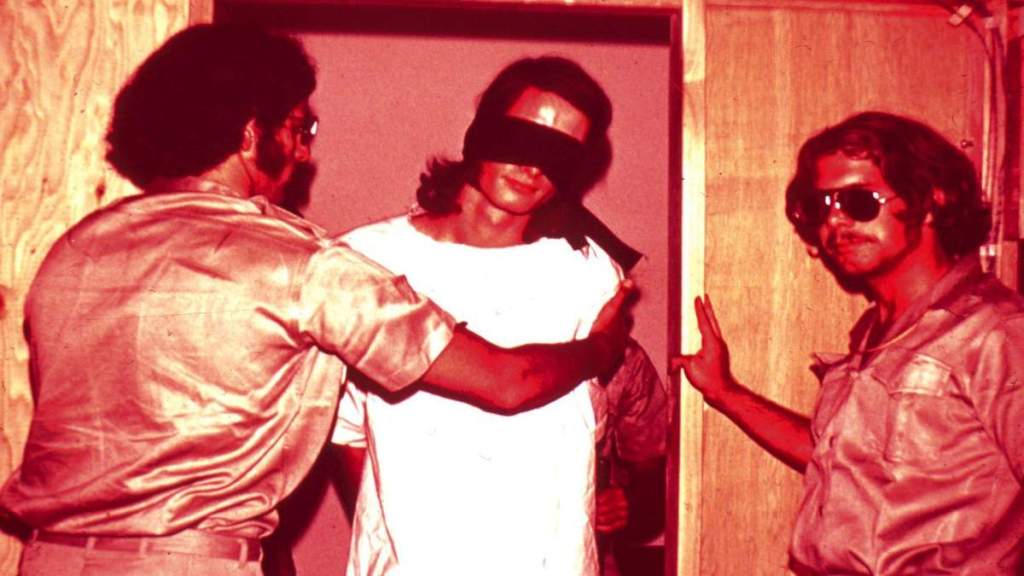
What these experiences mirrored was the famous prison role experiment conducted in the early 1970s, where ordinary participants were randomly assigned roles as guards or inmates.
Within days:
- Guards escalated cruelty
- Inmates deteriorated psychologically
- Abuse became normalized
The key finding was not that the guards were “bad people.”
It was that unchecked authority paired with role validation produces moral collapse.
Importantly, later analyses showed that participants with preexisting dominance and insecurity traits were the quickest to escalate abuse.
That distinction matters here.
Fragile Masculinity and Authority-Seeking Behavior
Many of my coworkers were explicit about their pasts.
They openly described:
- Being bullied
- Being socially rejected
- Being invisible
They also openly described this job as:
- “Almost being a cop”
- “Finally being respected”
- “Being in control”
Psychology has a term for this pattern.
Fragile masculinity is not about physical weakness. It is about identity instability—where self-worth is externally validated through dominance, control, and humiliation of others.
When such individuals are given uniforms, authority, and legal backing, cruelty can feel like self-repair.
That is why the destruction felt celebratory to them. It was not about safety. It was about status restoration.
Why Immigrants and the Homeless Become Targets
Enforcement rarely targets the powerful. It targets the least protected.
Undocumented immigrants and unhoused individuals are:
- Highly visible
- Politically scapegoated
- Unlikely to file complaints
- Easily framed as “non-compliant”
Within enforcement culture, this creates what psychologists call moral disengagement—a cognitive process that allows harm without guilt.
When people stop being seen as people, harm becomes procedural.
Red Flags: Psychological Indicators of Punitive Personalities
Based on both lived experience and research, warning signs include:
- Visible excitement during enforcement or punishment
- Fixation on rules over outcomes
- Mockery or humiliation of vulnerable people
- Overidentification with uniforms or authority symbols
- Narratives of revenge, not accountability
These traits correlate strongly with low empathy under power.
Green Flags: The Opposite Orientation
In contrast, people psychologically oriented toward connection tend to show:
- Discomfort with unnecessary punishment
- Focus on harm reduction
- Willingness to question systems, not just individuals
- Respect for dignity even during enforcement
- Power used reluctantly, not eagerly
These traits are associated with secure identity formation, not fragility.
Why I Couldn’t Stay
I left because I recognized something dangerous.
Not in the people being cited—but in the people doing the citing.
What I saw was not order. It was wounded masculinity playing dress-up as authority, enabled by systems that reward compliance over conscience.
Yesterday’s ICE raids didn’t create this dynamic. They revealed it.
Closing: What We Normalize Becomes Who We Are
If we want safer communities, we must stop confusing:
- Control with care
- Punishment with justice
- Authority with worth
Systems do not become cruel on their own.
They become cruel when people seeking validation through dominance are given unchecked power.
And once cruelty is procedural, it no longer feels wrong—just routine.
 CharlesRamosOfficial.com
Leave a comment